
Yamil Bukele highlights INDES PRO TALENT and talent development in El Salvador
Building talent
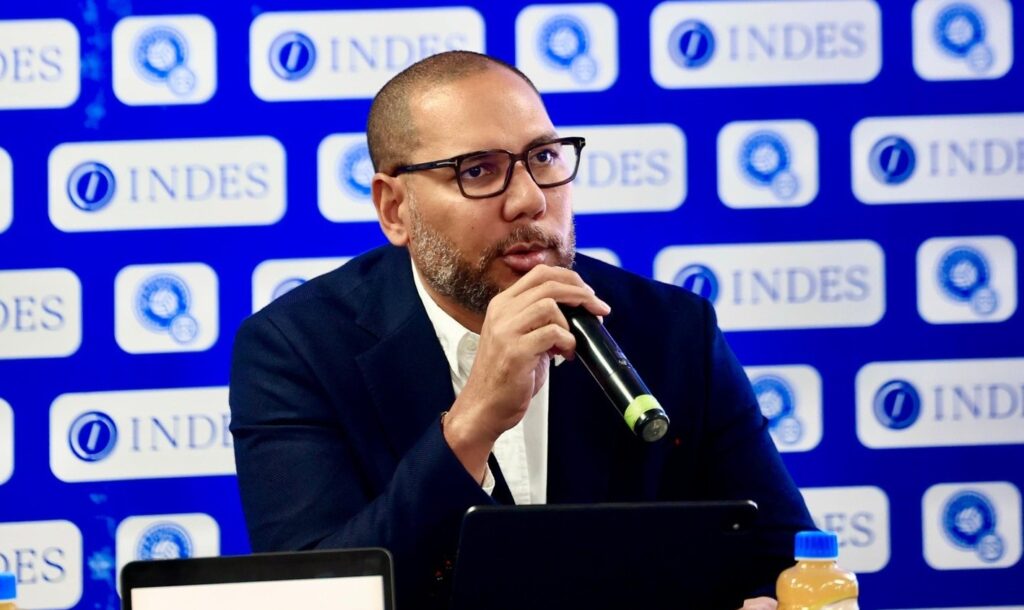
Interview with Yamil Bukele, honorary president of the National Sports Institute of El Salvador (INDES).
QUESTION. What does it mean for El Salvador to begin a transformation of football and sport in general?
ANSWER. We have always said that, from INDES, we do not develop or run sports ourselves, but we do create the right conditions for sporting practice. We have worked with national federations, associations and sports organisations, and now we have the opportunity to help ensure that football has the ideal conditions to truly become professional.
Q. Why has football become a priority within the national sports strategy?
A. We can’t say it is the priority; rather, it was the only sport that, from INDES, we had not been able to support in the same way we do with the other federations, associations and sports organisations. Now that we have the openness of the authorities of Salvadoran football, we are supporting it according to the requests they have made to us. Obviously, we cannot ignore the impact that football has on our society; it is the king of sports in El Salvador, and our support must be in line with that dimension.
Q. What is the long-term vision for the development of talent programmes within the national sports development framework?
A. Unfortunately, in El Salvador we are not very fond of patience or processes; we want everything in the short term and we don’t like to wait. Even so, from INDES we launched the “Sports and Recreational Development Programme El Salvador 2019–2039” as a strategic action plan that sets out how to work both in football and in all sports disciplines. Within this framework, we are working hard in different stages, and we are now starting another phase with the launch of the INDES PRO TALENT programme.
Q. What concrete elements does the development plan include for sport and, specifically, for football (education, competitions, talent identification, coach education, etc.)?
A. Coach education is the fundamental part of this. We cannot dream of developing high-level athletes and sportspeople if we do not have the right education in place, and that begins with the highest level of training for coaches, instructors and trainers.
Q. How will you ensure that the planned strategy reaches every corner of the country and not just the big cities?
A. That has been our commitment at INDES from the moment we arrived at the institution, and we have been achieving it little by little, and we will continue along that path. For example, the School Sports Games now cover the whole country. Both in conventional sport and in sport for people with disabilities, we guarantee participation from both public and private institutions.
Q. What makes this sports development model different from previous attempts in the country?
A. It is not my place to evaluate or talk about that; I want people to judge us based on what we have developed and improved in the sports area and on the progress made in this field, from grassroots to support for high performance, including growth and evolution in sports infrastructure, incentives and prizes for our athletes. Since we arrived at INDES on 3 July 2019, we have been continuously monitoring and supporting these lines of work. We take the past as a starting point so as not to repeat mistakes, but to correct them, taking into account the suggestions of those involved in each action so we can make better decisions.
Q. In what way can football become a driver of opportunity for children and young people?
A. Internationally, football is the most played sport in the world, and our country is no exception. You can play it practically anywhere, but in this country it has lacked structure, organisation and planning. There have been few opportunities for the youngest children and for young people, and at INDES we have worked in that area from the very beginning through the “LaLiga, Valores y Oportunidad” programme, which develops football and values education for more than 23,000 minors in the schools created. Until now, there was no structure for the next steps towards the country’s federated system, which now does exist. These boys and girls will have, for example, the opportunity to join the work being done with the Departmental Amateur Football Associations (ADFA) and to be observed by coaches from the Salvadoran Football Federation. In this way, even if they do not ultimately reach high performance, they will at least have had an emotional and values-based education that will allow them to become valuable people for our society and to have their own professional opportunities in the future.
Q. What is the long-term vision for Salvadoran football?
A. That has to be defined jointly between the authorities who come into the Salvadoran Football Federation and INDES. I believe the idea must be to manage to explain to all the key figures, stakeholders and sectors involved in football that we really have to sit down and work strategically on a medium- and long-term plan, truly following a process. We must be patient, because here in El Salvador there is no real player development structure, since the leagues are not strong, and that is why we don’t have a strong national team.
Q. How important are international experiences such as the U-17 tour of Europe?
A. Once we found openness from the current authorities of the Salvadoran Football Federation, as the National Sports Institute we decided to support a new line of action, taking advantage of the fact that the U-17 national team qualified for a World Cup in that age category for the first time in history. We could not miss the opportunity to support them. In this way, we gave the youngsters the chance to measure themselves against opponents similar to those they will face at the World Cup, such as Real Betis Balompié, Atlético de Madrid and Olympique de Marseille. We know there is still a long way to go, but taking this step and giving them experiences like the ones they had in Spain and France is very important, so that they don’t have to wait until the World Cup itself to gain that experience.